

Winter Swimming
Disclaimer: This article is based on my personal experiences and is intended to share practical lessons, not to provide medical advice. Cold-water swimming carries real risks, including drowning and hypothermia. If you have an underlying health condition, particularly one affecting your heart, circulation or ability to regulate body temperature, seek individual medical advice before starting. Read the safety guidance from the NHS and RNLI, and remember that no amount of experience makes anyone immune to the dangers of cold water.
Enjoying the Cold Without Underestimating the Risks
Winter swimming can be profoundly rewarding. It can also be unforgiving. Both things are true at the same time.
This is not about bravado, records or pushing limits. It is about understanding what cold water does to the human body and making sensible decisions so that we can enjoy swimming for years to come.
I have been swimming outdoors since August 2020. During that time, I have experienced the pleasure of swimming through the colder months, but I have also made a serious mistake that could have cost me my life. I share that experience because I would not wish it on anybody else.

Stick Together:
The usual safety precautions apply to winter swimming just as they do at other times of the year, but cold water makes the consequences of getting things wrong more serious.
Ideally, do not swim alone. It is best to have someone keeping an eye on you from the shore, preferably someone who is not swimming themselves. A companion in the water may also get into difficulty, so having someone on land who can raise the alarm is particularly valuable.
Even experienced swimmers can get into difficulty quickly. Cold-water problems are not always dramatic or obvious to people watching from a distance.
Before entering the water:
- Check the conditions. Consider the water temperature, air temperature, wind, weather forecast, visibility and water conditions. Think about your own physical state, too. Fatigue, dehydration, illness or feeling below par can all affect your ability to cope.
- Choose your entry and exit points. Know where you intend to get out before you enter. Remember that cold hands can make climbing out, undoing zips and putting on clothes much harder than usual.
- Be visible. A brightly coloured swimming cap helps other water users see you. A tow float can improve visibility and provide something to hold on to, although it is not a substitute for a lifejacket or a rescue plan.
- Tell someone your plans. If you are swimming away from an organised group, let somebody know where you are going and when you expect to return.
- Have a way to summon help. A whistle and a phone in a suitable waterproof pouch can be useful.
- Consider other water users. Boats, fishing equipment, submerged obstacles and other hazards may be present. Avoid swimming where it is prohibited or where conditions make it unsafe.
- Do not swim after consuming alcohol or taking recreational drugs. They can impair judgement, coordination and your ability to recognise danger.
It is worth remembering that someone who gets into difficulty in cold water may not be able to shout or wave for help. Never assume that silence means everything is fine.

Know Your Limits:
One of the most misleading things about winter swimming is the temptation to compare yourself with others.
You might see somebody swimming for twenty minutes or longer in very cold water and feel that you ought to do the same. You might have completed a particular distance last week and assume you can repeat it today.
Neither is a sensible way to judge your safety.
There is no universally safe duration for a cold-water swim. Water temperature, wind, clothing, physical condition, fatigue, swimming effort and individual physiology all influence how your body responds.
There is no magic number of minutes that guarantees health benefits. Three minutes is not a scientifically established threshold for obtaining the benefits of cold-water immersion, and the initial cold-water shock response settling down does not mean that the danger has passed.
If you are new to winter swimming, begin cautiously and keep your first swims very short. Pay attention to how you feel both during and after each swim. Build experience gradually, but do not assume that acclimatisation makes you immune to cold-water shock or hypothermia.
I would also discourage the idea that you must complete a particular distance or remain in the water for a particular length of time. Getting out early is good judgement, not failure.
Stay close to a safe exit and choose a distance that you can comfortably manage in the conditions. Remember that swimming back may be harder than swimming out, especially if the wind changes, you become tired or your muscles lose strength.
- If you suddenly feel unusually warm, confused, numb or clumsy, do not interpret this as a sign that you have become accustomed to the cold. Treat it as a warning to get out of the water as safely and promptly as possible.

Understand Cold-water Shock:
Cold-water shock is one of the most immediate dangers of entering cold water. Water at 15°C or below is generally considered cold enough to produce a significant cold-shock response, although the severity varies between individuals and circumstances.
The sudden cooling of the skin can cause an involuntary gasp, rapid breathing and an increase in heart rate and blood pressure. Breathing may become difficult to control, and the sensation can be frightening.
This is a physiological response, not a sign of weakness. It can affect experienced swimmers just as it can beginners.
If you gasp while your face is in the water, you may inhale water. Rapid, uncontrolled breathing can also make it difficult to keep your airway clear and coordinate your swimming.
The safest approach is to enter slowly, keeping your head above the surface. Do not jump or dive into cold water.
Once in the water, give yourself time to adjust. Concentrate on keeping your airway clear and allowing your breathing to settle. Do not attempt to overcome the initial shock by swimming hard, forcing yourself to continue or deliberately breathing rapidly.
If you cannot regain control of your breathing, do not proceed with the swim.
If you become overwhelmed in the water, try to float on your back with your airway clear of the surface. Call for help if necessary. If you can reach safety without putting yourself at greater risk, do so once you are able to move safely.
Cold-water shock can be dangerous even if you are fit, confident and accustomed to swimming outdoors. Respect it every time you enter the water.
- For further guidance, read the RNLI's advice on cold-water shock.
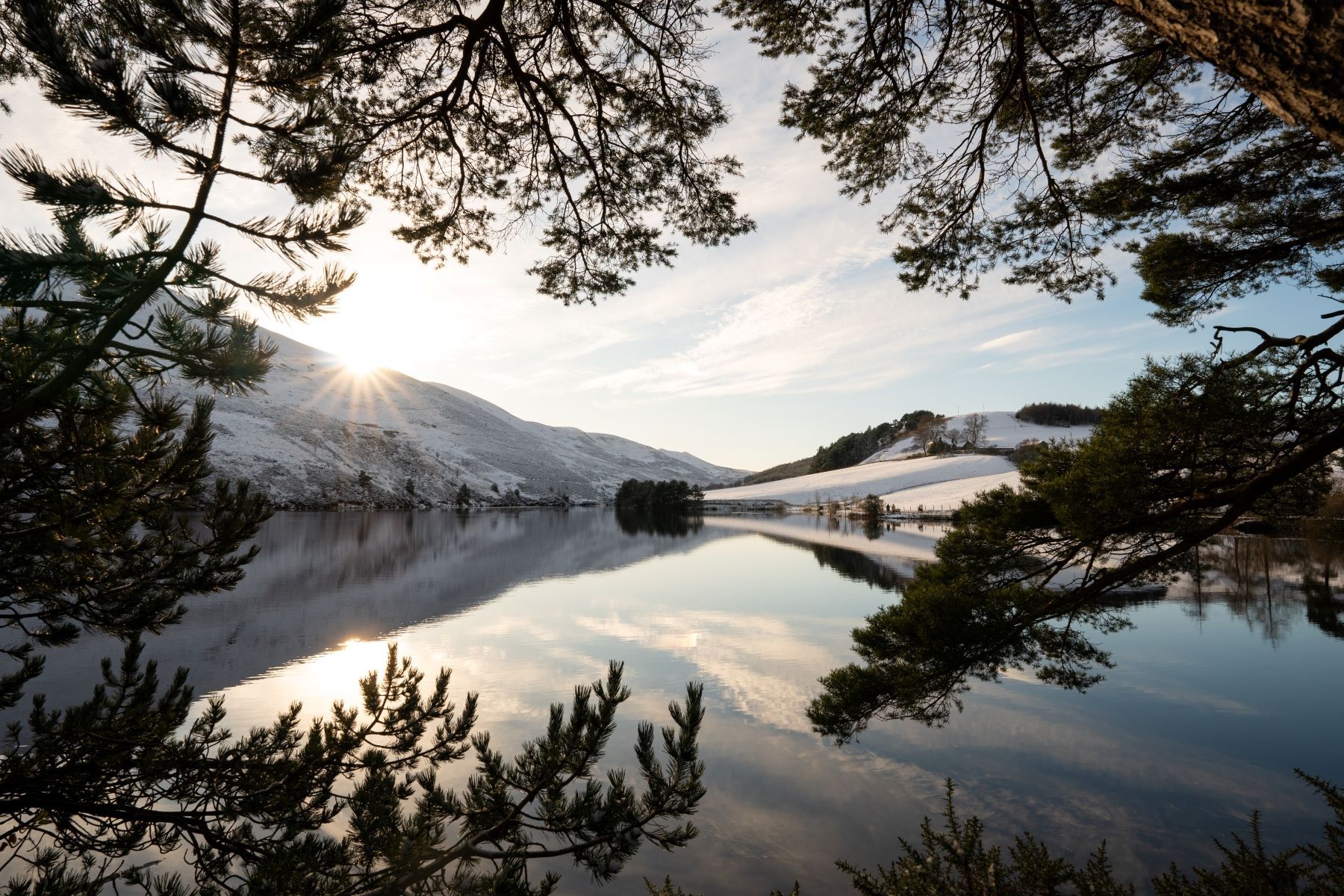
Prepare before you enter:
One of the simplest ways to make a winter swim safer is to prepare everything you need before getting into the water.
Have your towel, warm clothing, footwear and drink ready. Arrange your clothes in the order you intend to put them on, and make sure you can reach them easily with cold hands.
I recommend choosing clothing that is easy to put on and take off. Complicated fastenings, tight trousers and lace-up boots can become surprisingly difficult to manage when your fingers lose their dexterity.
A changing mat is useful for keeping your feet off cold, wet or icy ground. Bring more warm clothing than you think you might need, including windproof outer layers.
Think about the weather after the swim, not just the conditions when you enter the water. A cold wind can make getting changed particularly uncomfortable.
If the ground is icy, take care when walking to and from the water. Slipping on the bank may be just as dangerous as getting into difficulty in the water.
If the water is covered with ice, do not treat breaking through it as a normal part of winter swimming. Ice-covered water presents additional hazards, including sharp edges, difficult exits and the possibility of becoming trapped or disoriented. Do not attempt to break a route through ice or enter beneath it without specialist arrangements and appropriate safety support.
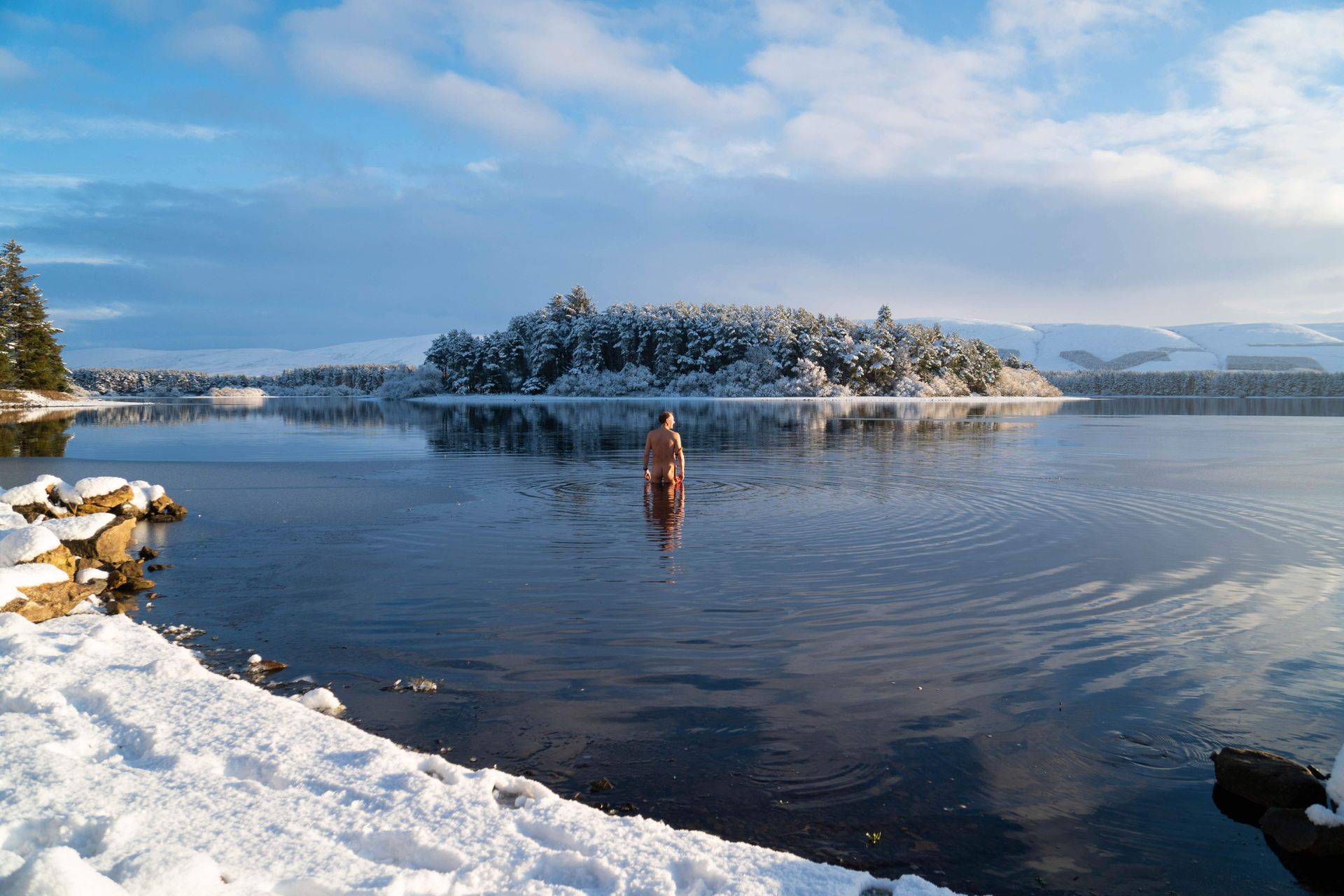
Recognise when your body is struggling:
Cold water affects the body in several ways. The initial cold-shock response is only the beginning.
As exposure continues, muscles and nerves become less effective. Hands may become clumsy, grip strength may deteriorate and swimming technique may suffer. You may find it increasingly difficult to coordinate your movements or get yourself out of the water.
This can happen before you fully appreciate how cold you have become.
Warning signs include:
- Persistent or severe shivering.
- Numbness or loss of sensation.
- Weakness or difficulty using your hands.
- Loss of coordination or an increasingly ineffective swimming stroke.
- Unusual fatigue or difficulty thinking clearly.
- Confusion, stumbling or slurred speech.
- An unexpected feeling of warmth despite being cold.
If your movements are deteriorating, do not try to swim harder to compensate. Leave the water as safely and promptly as you can, with assistance if needed.
Confusion, poor coordination and slurred speech can indicate hypothermia. If these symptoms occur, seek urgent medical assistance. Call 999 if you suspect serious hypothermia.
Remember that your judgement may also be affected by cold. You may not recognise how much difficulty you are in, or you may convince yourself that you can continue when you should stop.
This is another reason why having somebody watching from the shore is so important.
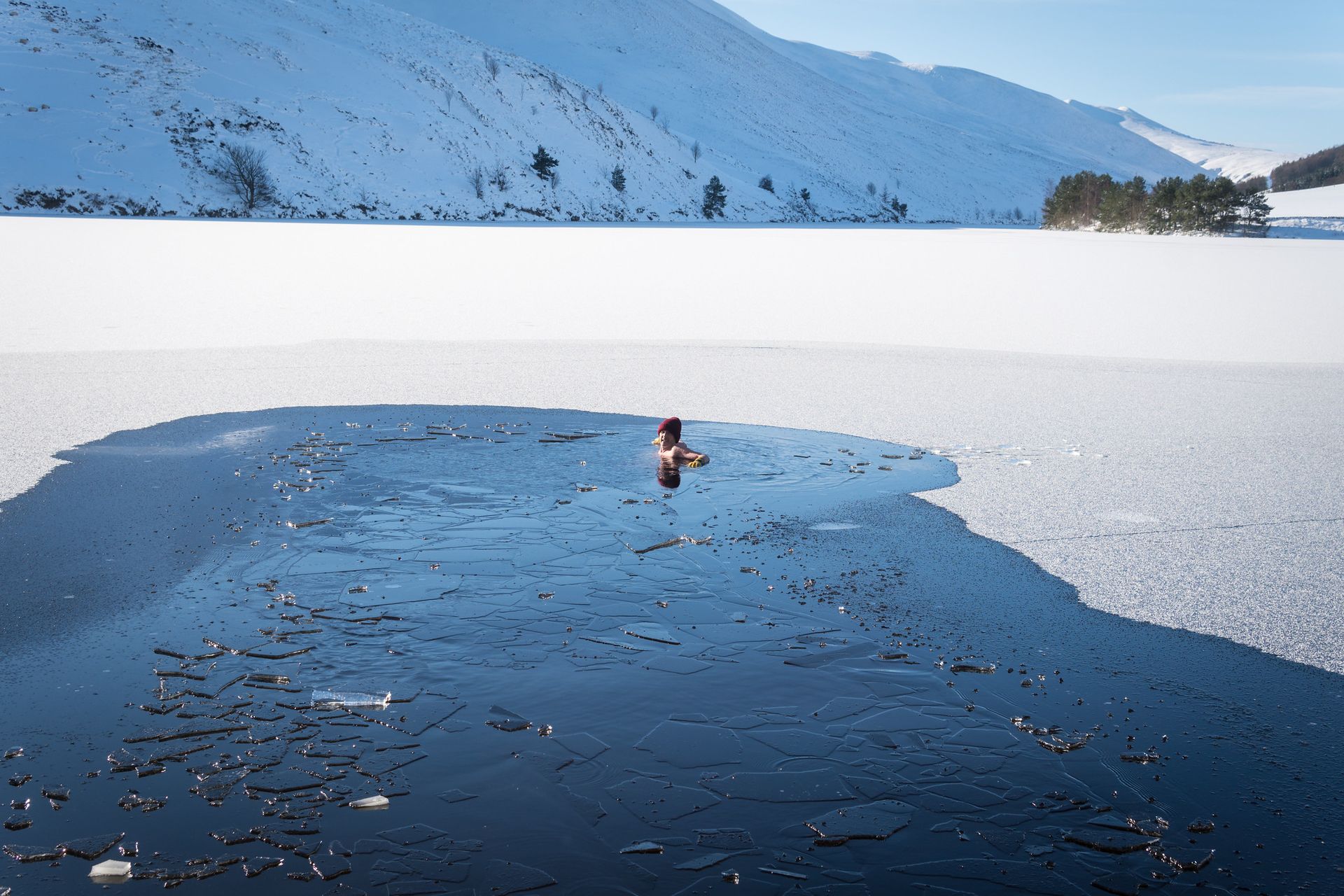
Getting out and warming up:
Your swim does not end when you leave the water.
Afterdrop is the term used to describe a continued fall in core body temperature after leaving cold water. You may continue to feel colder, become increasingly shaky or feel faint even after you have got out.
There is no universal ten-minute deadline by which you must be dressed. Nevertheless, it is important to get dry, shelter from the wind and put on warm clothing promptly.
My routine is to have everything ready beforehand so that I do not have to think too much about what to do next.
A sensible approach is to:
- Get out of the water carefully, using your planned exit point.
- Remove wet clothing and dry yourself as promptly as possible.
- Get out of the wind and put on warm, dry layers, including clothing that covers your head and torso.
- Have a warm, non-alcoholic drink if you are fully alert and able to swallow normally.
- Ask your companion to keep an eye on you while you recover.
Rechargeable hand-warmers may be useful for comfort, but they should not be relied upon to prevent or treat hypothermia. Take care when using them against cold or numb skin, as burns may go unnoticed.
I would not recommend strenuous exercise, such as star-jumps, as a universal method of warming up after a cold-water swim. If you are significantly chilled, weak or showing signs of hypothermia, exertion may be inappropriate. Concentrate on getting dry, sheltering and warming gradually, and seek medical help if necessary.
Do not drive if you are shaking uncontrollably, confused, faint or otherwise not fully recovered.
If somebody is confused, has slurred speech, loses coordination or develops severe symptoms, call 999. Keep them sheltered and warm while waiting for help. Do not give drinks to someone who is confused or unable to swallow safely.
The most important thing is to prepare properly, recognise the warning signs and have someone available to help. If you are already struggling to dress yourself, you may need assistance rather than simply more time.
Psych yourself up, but do not force it:
To be honest, I think a degree of apprehension about entering cold water is entirely understandable.
Even after many swims, there can still be a mixture of excitement and uncertainty when you approach the water. The important thing is not to confuse courage with ignoring what your body is telling you.
Take your time. Enter slowly and keep your head above the surface. Do not feel that you have to immerse yourself to the neck, put your face into the water or complete a swim simply because you have made the journey.
If you feel overwhelmed, stop and reconsider. If you cannot control your breathing, do not start swimming. If you are already in difficulty, prioritise keeping your airway clear, floating if possible and calling for help.
You can always turn around and get out.
There is no shame in changing your mind before entering the water. There is no shame in getting out after a few seconds. And there is certainly no shame in deciding that the conditions are unsuitable on a particular day.
The aim is to enjoy the experience, not to prove anything.
For me, the most rewarding swims are those in which I can relax, appreciate my surroundings and leave the water feeling that I have enjoyed the experience without taking unnecessary risks.
Why do it at all?:
You might reasonably ask why anyone would choose to swim in freezing water.
For me, the answer is straightforward. Since starting outdoor swimming in August 2020, I have found it a wonderful source of enjoyment, exercise and perspective.
I love the feeling of being immersed in nature. I enjoy the walk to the water, the changing seasons, the light on the reservoir and the sense of calm that can follow a swim. Sometimes I look back at the water afterwards and wonder how I persuaded myself to get in.
I have also found that swimming helps me put everyday worries into perspective. For a short time, there is nothing to concentrate on except the water, my breathing and my surroundings.
I feel more connected to nature, and I enjoy the physical challenge of swimming outdoors. The experience has become an important part of my life.
There is a particular pleasure in returning to the shore on a cold day, getting dressed and feeling the warmth gradually return. It can feel wonderfully restorative.
However, the benefits people experience will differ. Cold-water swimming is not a guaranteed treatment for any medical condition, and the risks should never be ignored in pursuit of a particular feeling or perceived health benefit.
For me, the value lies in the whole experience: the exercise, the scenery, the sense of achievement, the routine and the people I have met along the way.
Mental health, swimming and community:
There are people in the swimming community who come to the water seeking a little relief from the difficulties life has thrown at them. I understand that feeling.
I suffered during my teenage years and carried the burden of those experiences well into adulthood. For a long time, I found it difficult to move beyond the effects of that period of my life.
Since discovering outdoor swimming, I have found something that has helped me build a different relationship with the world around me. The swimming itself is part of that, but so is the community.
The people I have met through swimming have offered companionship, kindness, humour and encouragement. There is something reassuring about sharing an experience with others who understand why you might choose to get into cold water on a winter morning.
Occasionally, somebody watching from the shore will say something along the lines of, "You must be mad to do that."
I know that such comments are usually intended harmlessly. Nevertheless, I sometimes find them unsettling because words such as mad and mental can be hurtful to people who have experienced mental ill health.
For years, I struggled with the effects of my upbringing and earlier experiences. I gradually came to understand how much those experiences had shaped me. I am grateful that I no longer feel haunted by that period of my life in the way I once did.
I have sometimes used humour to respond to comments about my swimming. My standard answer has been:
"Yes, I was before entering the water, but I'm completely cured after being in it."
I mean that as a joke, not as a medical claim. Outdoor swimming has helped me, but I would never suggest that cold water is a cure for mental illness or trauma.
For anyone struggling with emotional difficulties, I hope they can find something that brings them comfort, connection or a sense of possibility. For me, swimming in the beautiful natural surroundings of Glencorse Reservoir has been one such thing.
Immersion in cold water makes me intensely aware of the present moment. The sights, sounds and sensations can provide a welcome break from the thoughts that otherwise occupy the mind.
Above all, the group and the people who have become part of my swimming life have helped me build a bridge between my past and my present.
That is something I value enormously.
The day I got hypothermia:
This is the first and, I hope, the last time I experience hypothermia.
On 1 March 2021, I made a serious mistake at Gladhouse Reservoir. I was swimming to the main island from a remote spot near Moor Foot Farm. The air temperature was 2.0°C and the water was only 4.9°C.
I had already swum a fair distance when I decided that I could manage the rest of the way to the island. Unfortunately, it was much further away than it had appeared.
I should have turned around earlier. Instead, I continued until I felt I had gone too far to turn back and that I needed to reach the island simply to rest.
When I arrived, I was not thinking clearly. I considered swimming towards a nearer shore on the other side of the island, but worried about how I would warm up afterwards.
I was also skinny dipping and, rather foolishly, thought that running naked for three kilometres around the perimeter of the reservoir would be embarrassing. In retrospect, that would have been the safer option.
In my increasingly confused state of mind, I convinced myself that the only choice was to push on and swim back the way I had come, past the smaller island and towards the shore beyond it.
I had seen some paddleboarders in the distance to my right and thought I could call on them if I got into difficulty.
As I re-entered the water, I felt afraid but tried to remain calm by concentrating on my swimming.
After a few minutes, my head began to droop to the right. I was struggling to keep it straight, and I was no longer fully aware of my surroundings.
I decided that the only way to get through it was to count my strokes.
Ninety-eight, ninety-nine, one hundred, one hundred and one.
It became a numbers game, a question of time. I kept telling myself, "This is not the day I die."
I could hardly believe that I had put myself in this position.
I did not have a tow float. I could still see the paddleboarders, but they were now too far away, and I could not bring myself to shout for help.
By the time I reached the shore, I was thoroughly exhausted.
For the first time in my life, I was sobbing uncontrollably. I could do nothing for myself. I could manage only two words: "Tea" and "Towel".
My children, who were then aged eleven and thirteen, helped remove my neoprene socks and get some layers of clothing on me.
I remember a strange sense of serenity, almost as though I were outside my own body. I kept apologising to them as I sobbed and shivered. I do not remember drinking the hot apple tea, although my children later told me that I kept asking for more long after the flask was empty.
After a while, I heard other voices. A couple had come over to help. They put my shoes on, and I remember being unable to see their faces properly. My mind seemed trapped in a narrow tunnel of distress.
Eventually, they got me to my feet and supported me as though they were carrying someone from a battlefield.
I never learned their names, but I remember that the woman said she was an NHS nurse and that they were both from Penicuik. I would love to thank them properly one day.
My children were frightened, and I dread to think how they must have felt watching their father in that state.
I believe that without the couple's help I would have struggled to get back to my car, which was more than a kilometre away. Afterwards, I worked out that it had taken about an hour to get dressed and receive the help I needed to return to the car.
I had been in the water for more than thirty minutes.
I had made a series of poor decisions: underestimating the distance, failing to turn back when I should have, swimming without adequate support and continuing when my body was already struggling.
The most frightening part is that I was no longer thinking clearly enough to recognise the seriousness of my situation.
It took me many months to rebuild my confidence sufficiently to stay in the water for more than ten minutes again.
I will never again attempt a swim of that distance in such cold water without suitable safety arrangements and support.
My experience taught me that cold water does not care how fit, determined or experienced you are. It can impair your body and judgement before you realise how much trouble you are in.
I am sharing this account not to encourage anyone to attempt a similar swim, but to help others avoid making the same mistakes.
Please do not use my experience as a benchmark for your own limits. I was fortunate to get back to shore and to have people there who could help me. Things could easily have turned out very differently.
My son had been flying his drone that day, and I had set up a recorder about fifty metres from where I entered the water to capture audio for his video. It recorded the sound of my return.
I find the recording difficult to listen to. I am embarrassed by it, but I have kept it as a reminder of what hypothermia and extreme cold can sound like.
You can hear it here: Audio recording from my return to shore.
I can rarely bring myself to listen to more than ten seconds of it.
Final thoughts:
Winter swimming has brought me a great deal of pleasure. It has helped me connect with nature, keep active and meet people who have become important to me.
But the lesson I learned at Gladhouse Reservoir remains with me.
Cold water demands respect. Experience is valuable, but it does not make us invulnerable. Acclimatisation may make the initial sensation more familiar, but it cannot guarantee that we will remain safe.
Plan your swim. Check the conditions. Have somebody watching out for you. Enter slowly, keep your head above the water while your breathing settles, and get out before you begin to struggle. Prepare your clothing and warming arrangements in advance, and take your recovery seriously.
If the conditions are unsuitable, do not swim. If you are unwell or unusually tired, reconsider. If something does not feel right, stop.
There will always be another day to enjoy the water.
For me, that is what winter swimming should be about: not how long you can endure the cold, but how to enjoy the experience and return safely to do it again.
Further reading
- RNLI: Cold-water shock
- NHS inform Scotland: Risks of open-water swimming
- NHS inform Scotland: How to swim safely in Scotland's outdoor water
- RNLI: Water safety and recognising the risks
These resources provide additional guidance on cold-water shock, swimming conditions and reducing the risks associated with outdoor swimming.
This article reflects my personal experiences and understanding as at October 2026. It is not a substitute for current professional safety or medical advice.